Tuesday, 27 February 2018
Final Product

Sunday, 18 February 2018
Short Film Editing Stages


 I added the screen recording to Final Cut Pro and decided that I did not find it engaging to watch as it was silent. To change the pace and make it more interesting I added music to the clip and was much more happy with the product of this. Whilst searching for the right song, I had to ensure that it was not copyright and that I was legally able to use it in my short film. Another factor was the pace of the music and if it would be engaging enough to keep the audience interested to see the rest of the plot unravel.

As the time transition is just text appearing on the screen for a couple of seconds I also had to think of a way in which I could keep this interesting in order for my target audience to continue watching. There was a plethora of choices in terms of transitions available to add to the slide. The stereotypical 'wipe' or 'drop in' were too boring for the likes of my target audience so I decided to use a transition that gave the slide a stereoscopic 3D effect and I used this for all of the time transitions to ensure that there was continuity. This effect gave more of a jagged transition which I felt was most relevant to the thriller genre.
 Whilst adding in the transitions it was important that I used it either side of the slide to give it a slicker effect for the changing of action on the screen. I also had to choose the screen time for the time transition. I chose 2.3 seconds as I did not want it to be too short so that the audience have to pause it to read it or have to rewind to understand why the text was relevant, and this time slot also meant that it wasn't on for too long that there was an awkward pause in the short film where the target audience were left feeling uncomfortable.
 This first shot is at a low angle because it is most effective in terms of levels and the rule of thirds. It captures the two shot nicely as there is no central actor, making them both relevant. Being down low meant that I could protect the audio being caught on camera from the noisy waves on the other side of the wall.
 To maintain engagement from the target audience I thought it would be best to change the location in the scene following on from this. It changes to a POV shot of alcohol being exchanged between two people. This action links up to the conversation the characters were having in the previous scene.
In the exchanging shot, I increased the original speed of the clip to maintain pace and intensity of the action. With this being a common occurrence in society (when older people buy alcohol for those who are underage) I decided I would make it as realistic as possible by making the shot subtle, fast and out of sight from other members of the public. This would make the action most relatable and this shot is the beginning to the build up to the climatic action shot seen later on in the film. The 'alcohol' is the motive in the short film and it is also the reason behind the thrilling plot twist so it was necessary
to shoot a scene displaying the exchange.

Keeping with the theme of the alcohol being illegal and dangerous, I also increased the speed of the next clip which was the character walking away from the exchange. The way that the alcohol is taken and hidden in the jacket indicates that she does not want to be seen. The actor also looks over her shoulder which conforms to the codes and conventions of the thriller genre as paranoia is a key theme.

The next scene displays the final connection of all four of the main actors together and it shows exactly how the scenes connect. I tried to do this as smoothly as possible so I used various camera angles and speech of the characters to support the fluency of the scene. The cutting back and forth between the scenes is in order to display that there is different action taking place at the same time and how they link up to the entire story line.
SHOT A

SHOT B

SHOT C

SHOT D


Shots C and D link up to A and B because they display the arrival of the fourth and final main character to the original location of the short film. The dialogue at this point is informing the target audience of what is to come and it is setting up the following scene. Again, there is more experimentation with camera shots here as there is a side profile close up that leads into a pan shot of where the other actors are. The master shot informs the audience of the location of the shot and that this shot concludes the actors involved within the short film.
 The dialogue from the previous scene directs the actors to lead onto the next location which requires another transition. To do so I decided I would use a panning shot of the actors moving from their original location across the screen and disappearing. I did this so that it was unclear as to where the actors were travelling to. This leaves more suspense for the target audience and keeps them more engaged, as opposed to keeping the plot predictable and monotonous.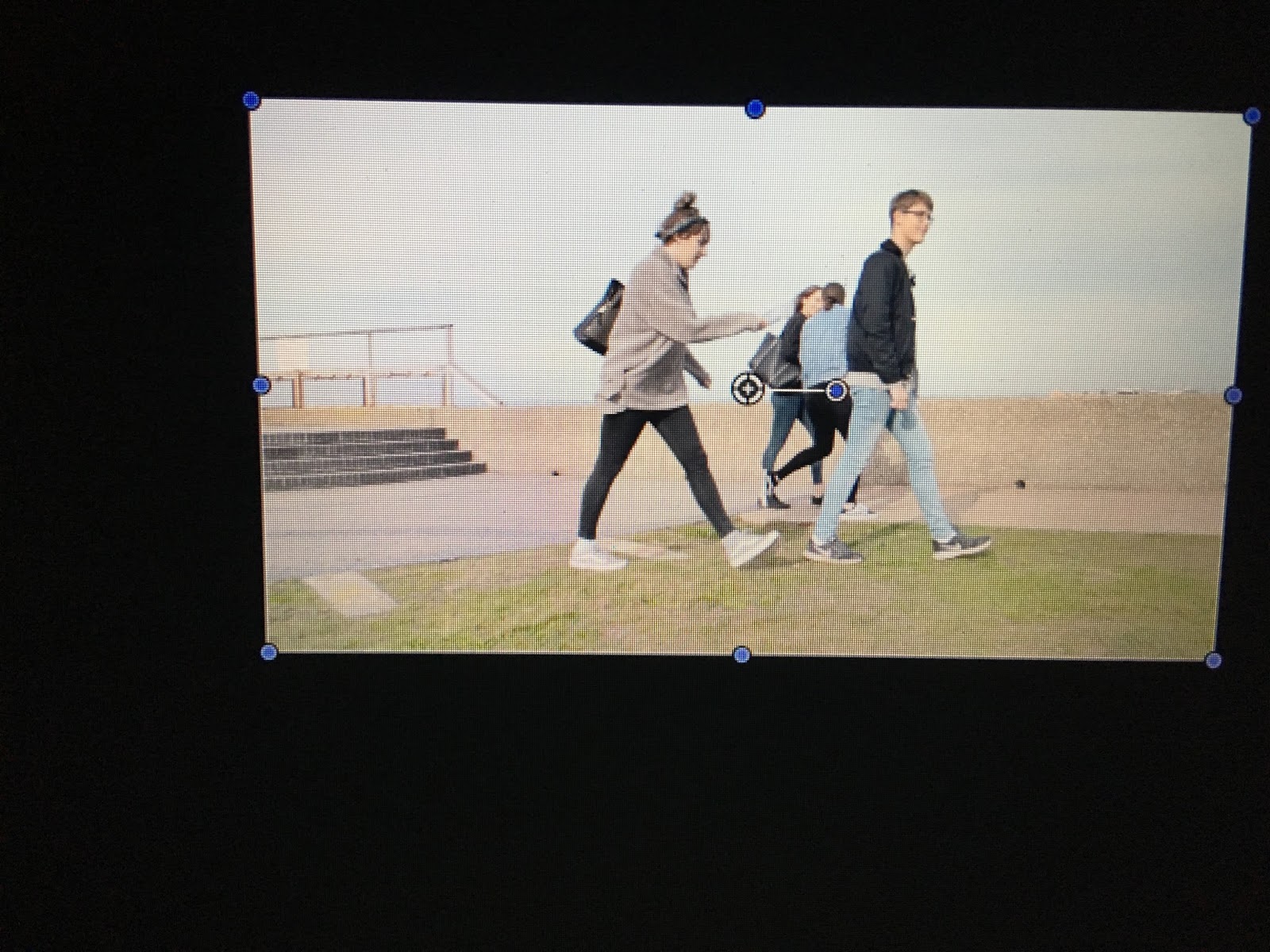
During the editing process of this shot I expedited the clip as it was just a walking shot which would have been boring and uninteresting at normal speed. This subverts the codes and conventions of the thriller genre as typically the editing would be slowed down to create tension in the action, however I believe that the opposite of this was more effective as it maintains the pace of the short film.

 This is how I layered the text onto the clip in my short film. I conformed to the codes and conventions of the thriller genre in terms of the timing of my text as there is typically a slight backstory to the action to begin with and the title sequence appears when the significant part of the story line is beginning. The scenes at the start of my film explain how and why they are there and the car scene is where the action is starting to build up, which is why I chose to add the title screen in here.
 It was important to have a well known song for this part of the short film as it made it more reliable for the target audience and kept the music relevant. By having familiar music featured in the short film it would make it more likeable to those whom particularly enjoyed music, and it would also make the short film more memorable if there was catchy music that got stuck in the audience's head- further relating the song to the short film and leading to likely recommendations for others to watch. This conforms to the codes and conventions of short films in terms of methods seeking success.
To ensure that the long car journey scene is not tedious for the viewers once again, I decided I would change the action in the middle of the scene to keep it interesting.

In the research I performed of my target audience I decided that I would look at day to day life of teenagers- particularly those in my target audience. One of the most frequent events throughout a teenager's daily routine is being checked up on by their parents. Despite it not being a strikingly interesting event, I decide it would fit into the story line of my short film effectively so I incorporated it into this scene. The reason behind this is to highlight the lie that the character is telling to her parents when being asked where she is going, leaving her with no alibi- at this point the actors and the audience are naive as to why she might need an alibi.

After the phone call, the music comes back on and the atmosphere changes from a tense phone call to an exciting drive in a matter of seconds. This conforms to the typical codes and conventions of the thriller genre as the clips are fragmented and jump back and forth between heightened emotions.


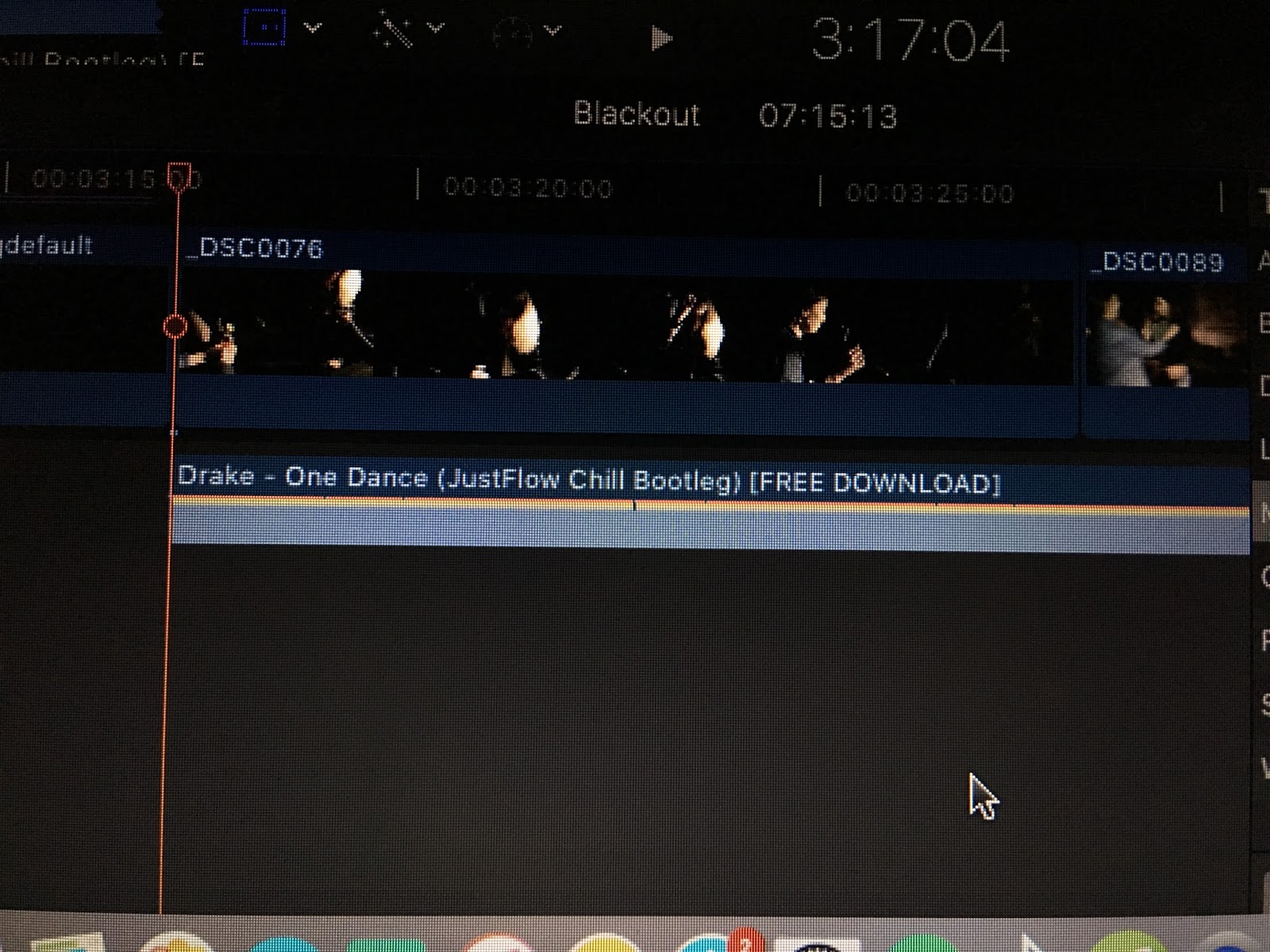

Another popular song was used over the top of the action to increase the pace of the story line once again. The action in the clip and the speed of the song were both increased which built up towards the climatic part of the story line. To indicate the change of the time again, another time transition was used. This signified how the previous scene came suddenly to an end. Initially I had a clip in the film that displayed how the teenagers had found the strange location they woke up in but I re-watched it with the rest of the action and decided it was not effective and that I did not like it.
Here is the deleted scene:
However there are a few reasons that counterbalance the positive effects of this scene in my short film and this includes running time, pace and screen time. Having the brief for the short film being around 5/6 minutes, I was already over the limit by a couple of minutes and I decided I wanted to be closer to the 6 minute mark. To do so I had to go through and select the least relevant scenes that would not confuse the action in the plot. The second reason is because the action was at such a fast pace in the previous scene and I only intended for the pace to change when the "next day" arrived thus this scene slowed the action back down again. Having a large amount of screen time was impractical and by looking back over the scene I decided that it was completely irrelevant as I wanted to leave an element of surprise in how they ended up where they woke up in the following scene. For those reasons I decided the scene was irrelevant and that the short film was more effective and mysterious without it.


Here are the screenshots displaying the continuity in the time transitions. This also shows the abrupt end to the previous scene.


I used different camera shots in these final scenes aswell and the cutting of them added to the effectiveness of the pace of the action. For instance there is a shot of the teenagers fleeing from the building taken from behind them, and another of the same piece of action except it's filmed from outside to create a sense of continuity.

Below are the final shots of the short film and these reveal how the plot ends. During the editing process I decided that I wanted the cuts of the walking with the camera to be jolty so to create more suspense and conform to the shaky cam typically used within the horror genre. I also manipulated the music so that the one of the dramatic drum beats would occur at the same time as the conclusive shot of the short film as a signifier of the end.
Sunday, 28 January 2018
Editing programme- updated post

 Unfortunately during the editing process, Adobe Premiere Pro crashed and it meant that I lost some of my footage due to this problem. Luckily I was able to download another programme called Final Cut Pro before it was too late. This was the editing software that I used to create my final product on. The loss of some of my corrupted clips meant that I had to compromise in terms of how I put the short film together as this happened too late in the editing process to go and film some new clips. Working around this was a learning curve but I feel I was able to do so and still have an effective storyline shown throughout. Final Cut Pro provides non-linear, non-destructive editing of any Quicktime-compatible video format. It comes with a range of video transitions and a range of video and audio filters such as keying tools, mattes and vocal de-poppers and de-essers. It also has multiple colour correction tools including colour wheels, sliders and curves, videoscope and a selection of generators. The viewer has tabs for each channel of the selected clip's audio, in which the waveform for the audio can be viewed and scrubbed, and where its volume can be keyframed. The effects for the clip appear in the filters tab which is also where the parameters of the clip can be adjusted and keyframed. Clips can be edited together in timelines called sequences. Sequences can be nested inside other sequences so that a filter or transition can be applied to the grouped clips. The timeline on Final Cut Pro allows 99 videos to be layered on top of each other which is useful when building up different layers of sound throughout the short film. The size of a video clip can be altered, and the clips can be cropped, among many other settings that can be changed. This programme has saved my short film project as it was easy to pick up and learn how to use and it auto-saved each stage of the editing process therefore I did not have to worry about the programme crashing and having to restart.
Institution

Short Film Analysis
The Witness
Two Detectives
The introduction of this short film has non-diegetic music that creates the atmosphere for the scenes to come. As the characters are walking into shot the pace is slow as the speed has been altered to build tension. The credits are carefully featured throughout the opening sequence so that they do not defer from the introduction but are still shown as important. The title of the short film follows this on a new screen and when it cut backs to the original setting the speech begins. From the title 'Two Detectives' it is immediately apparent that the characters are in the middle of a case because of the terminology used. This short film features lots of comedy within the speech but this is unexpected and subverts the stereotype of a typical thriller short film because the narrative is generally serious and about the crime or the events taking place. Within "Two Detectives" every other line of speech features a humorous comment about spoilers of films or series such as 'Game of Thrones'. This is effective because it is unexpected, thus keeping the audience engaged with the action.
Three Minutes
The beginning of this short film is very effective because it uses a sound bridge of diegetic noises to give clues to the audience as to what may be taking place in this short film. The title and actor's name are the first things to appear on screen and they are memorable because of the white text on the black background and nothing else causing a distraction. The scene begins with a mid shot of a man in a suit tied up in a chair and he is completely unaware of how he has come to be where he is and why he is in the situation. This conforms to a stereotypical thriller genre as there is generally an unsolved twist to keep the audience engaged and leave them with the same confusion as the actor. I plan to use this acting and screening method in my short film as I believe it to be very effective and interesting for the audience to watch. The setting and the props are very basic but this is good because it means there is more focus and attention paid to the main character and no distractions from the action taking place. Another camera shot used is a high-angle shot which displays the action from the corner of the room through what appears to be a CCTV camera, conforming to a convention of a typical crime thriller of the idea of being watched. As the man realises that there is a bomb in front of him and the time of 3 minutes appears on it, the tension and suspense builds and some non-diegetic music begins in the background to increase the pace of the short film. I would like to use this pace technique in my short film when the denouement of the film has been reached. The switching between the close up shots of the man and the bomb timer is effective because it emphasises the build up in the action and how heightened the pace is. Once he has stopped the bomb the suspense decreases and the door handle makes a noise which makes the audience believe the man has been allowed to escape the room he was trapped in. However we soon learn that once he presses the button on the door it is linked up to the bomb. The timer on the bomb is not displayed on screen again so we are unaware as to how much time he has left but the film is cut off at that point anyway to leave the action on a cliffhanger. This conforms to the codes and conventions of a stereotypical crime thriller and I would like to use this technique in my short film, as the audience are left wanting to know what happens. By leaving questions unanswered it is more likely that people will remember the film and thus if there were a sequel there would already be an audience waiting to watch.
Wednesday, 29 November 2017
Choosing a title
The title of a short film is important because it should give an audience the incentive to watch the film despite not knowing everything about the plot. If the title does not catch the eye of the audience then they will not be interested in watching the film and therefore it will be unsuccessful. It can be used to neatly encapsulate the underlying idea or moral of the film. To ensure I had the correct title I decided I would have to think of a few potential options first and make my decision based on what is most fitting with the plot and the moral of the short film.
Here are my ideas:
Blackout
The reason behind this name is because at the end of the short film I intend there to be a blackout in the action at the end of the short film and by having this title the audience will be waiting for it to happen within the action. Having this effect at the end of the short film will ensure that the audience are engaged throughout the duration of the screen time. Another reason that I like this title is because some teenagers refer to getting really drunk as "blackout drunk" because that is what the human body does if too much alcohol is consumed, linking to the action in my short film.
Best Behaviour
I like this title because it is ironic and in the short film the actors are not on their "best behaviour". It is intriguing because it makes the audience wonder what sort of events will be taking place within the short film. Another reason it is effective is because there is a song by current artist, Louisa Johnson, called "Best Behaviour". This gives a different vibe to the title because it makes is more modern and relatable for teenagers, especially those that listen to this type of music. It would typically be associated with party songs and this links to the atmosphere in the short film.
17
This title is effective because it is short, ambiguous and doesn't reveal anything about the plot of the film. It is a plain title but engaging because of the lack of clues given about the events in the short film. I chose 17 because of the age of the characters in the short film and the fact that 17 is just below the legal drinking age of 18. This links it to the events of the plot but subtly so it does not reveal any obvious information.
Intoxicated
The phrase itself is obvious as to what it means and for this reason it is an option for the title of my short film. It is straight forward and has a self-explanatory meaning yet it leaves an air of mystery when it comes to what the short film would be about and it does not typically link to a crime thriller which I think would be more engaging for my target audience.
Chosen title- Blackout
After coming up with these five film title ideas I couldn't decide which would be most engaging so thought it was best that I asked people what was most intriguing for them. I went and asked 15 people who fitted into my target audience criteria and this provided me with the final name of my short film. The feedback I received was that this directly linked to the plot of my short film but also left it unclear as to what it was going to be about. I wanted my target audience to decide on the title of my short film because I want them to be engaged in every aspect of my short film to ensure I am producing what they are interested in. Overall this makes sure I am concise with my research and work towards each stage of the filming.
Here are my ideas:
Blackout
The reason behind this name is because at the end of the short film I intend there to be a blackout in the action at the end of the short film and by having this title the audience will be waiting for it to happen within the action. Having this effect at the end of the short film will ensure that the audience are engaged throughout the duration of the screen time. Another reason that I like this title is because some teenagers refer to getting really drunk as "blackout drunk" because that is what the human body does if too much alcohol is consumed, linking to the action in my short film.
Best Behaviour
I like this title because it is ironic and in the short film the actors are not on their "best behaviour". It is intriguing because it makes the audience wonder what sort of events will be taking place within the short film. Another reason it is effective is because there is a song by current artist, Louisa Johnson, called "Best Behaviour". This gives a different vibe to the title because it makes is more modern and relatable for teenagers, especially those that listen to this type of music. It would typically be associated with party songs and this links to the atmosphere in the short film.
17
This title is effective because it is short, ambiguous and doesn't reveal anything about the plot of the film. It is a plain title but engaging because of the lack of clues given about the events in the short film. I chose 17 because of the age of the characters in the short film and the fact that 17 is just below the legal drinking age of 18. This links it to the events of the plot but subtly so it does not reveal any obvious information.
Intoxicated
The phrase itself is obvious as to what it means and for this reason it is an option for the title of my short film. It is straight forward and has a self-explanatory meaning yet it leaves an air of mystery when it comes to what the short film would be about and it does not typically link to a crime thriller which I think would be more engaging for my target audience.
What happened last night?
I intend to use this phrase in the short film itself and therefore when the target audience watch it they will hear the title of the film being paraphrased which I think is extremely effective. This is a common phrase among people who have been under the influence of alcohol and are unable to remember the events of the night before. It is also a theme in my short film as the actors are incapable of recalling what they did by the time they wake up in the morning.Chosen title- Blackout
After coming up with these five film title ideas I couldn't decide which would be most engaging so thought it was best that I asked people what was most intriguing for them. I went and asked 15 people who fitted into my target audience criteria and this provided me with the final name of my short film. The feedback I received was that this directly linked to the plot of my short film but also left it unclear as to what it was going to be about. I wanted my target audience to decide on the title of my short film because I want them to be engaged in every aspect of my short film to ensure I am producing what they are interested in. Overall this makes sure I am concise with my research and work towards each stage of the filming.
Story boards

Subscribe to:
Posts (Atom)

-
Within our theory lesson, the class was divided and we researched different narrative theorist and the theorists. After doing so we reported...
-
Location ideas In the search for my location it was important that I found somewhere abandoned or at least somewhere that looked derelict...
-
When planning to create a magazine review page, it is essential to look at example and deconstruct what they have done in order to discover...


