Wednesday, 15 November 2017

Tuesday, 7 November 2017
Genre Theorists
Researching genre theorists is essential because it gives me access to knowledge, attitudes, assumptions and expectations of genre and the different theories available to choose from.
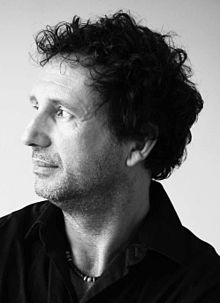
Stephen Neale
Neale declares that "genres are instances of repetition and difference" and later added "differences are absolutely essential to the economy of genre". This is because he believes repetition alone is not enough to keep an audience engaged. Neale believes that pleasure is derived from 'repetition and difference' and that without difference there would be no pleasure for an audience. Some people may gain pleasure through observing how the conventions of genre are manipulated, others may enjoy stretching the genre in new directions and the way in which they consequently shift our expectations.
He believes that Hollywood's generic regime performs two inter-related functions:
- To guarantee meanings and pleasures for audiences
- To offset the considerable economic risks of industrial film productions by providing cognitive collateral against motivation and difference.
Neale argues that genre is constituted by 'specific systems of expectations and hypotheses which spectators bring with them to the cinema and which interact with the films themselves during the course of the viewing process'.
Rick Altman
 Rick Altman is a professor of Cinema and Comparative Literature and his theories are focused around a semantic and syntactic approach.
Semantic- the conventions of the genre that communicate to the audience. For example the characters, locations, props, music, shooting style and other signifiers.
Syntactic- this is about the relations between the elements and the structure of narratives in genres. An example of this would be in a romantic comedy we would expect the potential lovers to begin by not liking each other, following on to a series of meetings/problems which eventually culminate their successful relationship.
David Chandler

His argument is that genres have become "too restricted" in today's society as the conventions do not allow them to adapt and change. Chandler explains the overlap in some genres. An example of this
 would be the hybrid of romantic and thriller films. The downside to hybrid genres is the sometimes it can mean they lose of the forms and conventions of the genre when they overlap.
David Buckingham
Buckingham suggests how genre is always changing and is strongly influenced by dominant ideas in society. He thinks that different generations have different values and beliefs therefore these affect the conventions of the genre. An example of this would be slapstick comedy and the way comedy has developed from that early form and become what it is today. It's much more complex in modern day especially when the comedy is used to convey a deeper meaning behind the humour itself.
Sound
As mentioned in the section about post-production editing, sound is very important in short films and like good editing it is an invisible element. The purpose of sound is to set the mood or atmosphere in a scene. It also has the power to emphasise reality.
Diegetic- this is any type of sound that the characters on screen can hear
Non-diegetic- this is any sound that the characters on screen cannot hear but the audience can
Synchronous- this is sound that is synchronised with the object of person giving off the sound
Asynchronous- this is when the sound is deliberately out of sync with what we see on screen. The sound comes from the action but is is not precisely synchronised with it. Asynchronous sounds create tension, curiosity or provide information.
Sound effects- these are sounds added to the visual editing
Sound motif- this is a repeated symbolic sound/music to create meaning. They are used to indicate a narrative turning point.
Sound bridge- a type of sound editing when sound carries on over a visual transition.
Dialogue- what the characters say on screen. When planning dialogue it is important to look at language, tone, accent and volume in order to have a particular effect on the audience.
Voice over- when we can hear the voice of a character and/or narrator speaking but they are not speaking on the screen. The purpose of them is to reveal thoughts/feelings, narrative development, background on characters or the plot.
Mode of address- this is the manner in which the narrative comes across to the audience and the choice in the style of language used by the character or narrator.
Direct address- when a director speaks directly to the audience an breaks the fourth wall through acknowledgment of presence of the audience.
Sound mixing- when mixes of sound from various sources is made through a multi-track mixing desk. Most of the dialogue in a short film can be remixed afterwards in the process of post-production.
Sound perspective- this is when the distance of a sound source is evidenced from the volume and timbre. It is referring specifically to edited sound.
Soundtrack- sound added entirely in post-production, done most often with a mixed music track.
Score- the purpose of a score is to set the mood and atmosphere of a scene. It is music composed, arranged and played specifically for the product, e.g. Adele- Skyfall.
Incidental music- non-diegetic music that accompanies events or changes of scene.
Themes- music that always accompanies this particular programme, film, or even a particular character to suit the mood or theme.
Stings- Musical stings are short bursts of music and they were originally used in TV and radio to bump together different chapters or sections of a show. They are used to highlight moments of significance or create tension.
Ambient sound- background sound that does not necessarily have to be in the field of vision as it can be recorded on location or added in post production.
After close evaluation of all of these different sound elements I have a good idea of the purpose of sound in short films and when exactly it has to be edited in. This is important research as it has opened my eyes to more techniques I was unaware of but can now use in the production of my short film.
Editing
There is an awful lot to consider when it comes to the editing of a short film. Some of the elements include: order of shots/shot choices, continuity, transitions, shot duration, pace rhythm and post production/visual effects. It was important to consider why each of these factors were vital to the short film and why getting them right was vital.
Order of shots- the meaning of a clip can change completely depending on the order in which they are cut together. Putting two shots together can suggest a connection or emphasise a contrast, and these both have a complete opposite effect on the target audience so it is important to keep the meaning behind each shot in mind. It can reveal who motivates the edit. Screen time also links to this as the order of shots can also show more of a particular character and give us clearer perspectives of their motives. It also indicates the importance of each character in the scene.
Continuity- in regards to editing continuity is the cutting of shots in order to tell a story with narrative continuity. It helps the viewer make sense of the action by implying spatial relationships and ensuring smooth flow from shot to shot. Continuity creates realism especially when the edit on screen is invisible so that the action appears less constructed. There are certain camera movements that make continuity much more effective.
This includes:
When analysing a lip it is important to consider how editing techniques are used to control what information is revealed/hidden from the characters and the audience. If the audience know more than what the characters do this can provoke an emotional reaction. An example of this would be cross cutting in a film between shots of a character and shots that suggest impending danger. The character does not see this but the audience do so this may cause them to feel anxiety and tension in the anticipation of something horrible happening. Editing is vital in terms of the factors of creating a short film because the clips, actors and mise en scene could all be perfect but if the editing was not done effectively or with care, this would have a significant impact on the quality of the short film.
Order of shots- the meaning of a clip can change completely depending on the order in which they are cut together. Putting two shots together can suggest a connection or emphasise a contrast, and these both have a complete opposite effect on the target audience so it is important to keep the meaning behind each shot in mind. It can reveal who motivates the edit. Screen time also links to this as the order of shots can also show more of a particular character and give us clearer perspectives of their motives. It also indicates the importance of each character in the scene.
Continuity- in regards to editing continuity is the cutting of shots in order to tell a story with narrative continuity. It helps the viewer make sense of the action by implying spatial relationships and ensuring smooth flow from shot to shot. Continuity creates realism especially when the edit on screen is invisible so that the action appears less constructed. There are certain camera movements that make continuity much more effective.
This includes:
- Establishing shot- establishes space within which the action is taking place.
- Shot/reverse shot- highlights conversation or emotions in reactions, facing one another.
- The 180° rule- ensures that the same space is being described in each shot and to do so the shots must remain within the horizontal axis.
- Eyeline match- when a character looks off screen and the next shot shows the audience what they were looking at.
- Action match- character begins to move in one shot and we see this movement continued in the next shot.
- Graphic match- compositional elements match.
- Parallel editing or cross-cutting- when doing these shots between locations coveys the impression that two or more events are occurring simultaneously. Typically done to build tension.
Non-continuity- this is when the continuity is broken and construction of action is more apparent. This is generally done through juxtaposition and metaphor inserts. The techniques that are used to emphasise non-continuity are:
- Cut away- an interruption of the action through the insertion of a view of something else.
- Jump cuts- these shots create a lack of continuity by leaving out parts of the on-screen action. This is most effective when showing the passing of time.
Transitions- the process of cutting from one shot to another is usually done through the use of a straight cut, however there are other means of transition including:
- Fade in/out- most commonly used to establish a new setting or element of narrative and is frequently used in death or endings. It is done when the preceding shot fades into black from which the following shot emerges and vice versa.
- Dissolve/cross fade- this is when the preceding shot merges into the following shot resulting in the two shots being superimposed. The longer the dissolve is, the more noticeable the superimposition becomes.
- Superimposition- placing one shot over another shot to show characters longing or in a supernatural narrative.
- Wipe- when one shot replaces another by travelling from one side of the frame to another with a special shape. There are different types of wipe shots but the one most frequently used is the 'invisible wipe'. They are used to show a change in location or viewpoint.
The purpose of transitions is to imply the passing of time, imply a change in action, or emphasise a connection, what a character is thinking, remembering or dreaming about.
Shot duration/pace rhythm- the duration of the shot will usually reflect the narrative content. For example a short shot conveys action and urgency, whilst a long shot would create a slower pace and conveys intensity and intimacy within the narrative. Long shots allow us to focus upon facial expressions and other aspects of mise en scene which would otherwise be missed.
Post production/visual effects- visual effects are applied in the post-production process to further manipulate the mise en scene of a sequence. Here are just a few elements of short films that can be altered after filming:
- Speed- slow or fast
- Colour- exposure and composition
- Split screen- the frame is split into sections so that we can see different events occurring at once
- CG- computer generated graphics
- Elipsis- presents action in less time on screen than it does in the story
- Expansion of time- opposite of ellipses. When action presented consumes more time on screen than it does in the story e.g. slow-motion
- Inserts- a method of editing where the editor freely moves shots and clips around as they please
- Sound levels- the value and the effects applied e.g. the Doppler effect when something is moving further away
- Silence- no noise for atmosphere
When analysing a lip it is important to consider how editing techniques are used to control what information is revealed/hidden from the characters and the audience. If the audience know more than what the characters do this can provoke an emotional reaction. An example of this would be cross cutting in a film between shots of a character and shots that suggest impending danger. The character does not see this but the audience do so this may cause them to feel anxiety and tension in the anticipation of something horrible happening. Editing is vital in terms of the factors of creating a short film because the clips, actors and mise en scene could all be perfect but if the editing was not done effectively or with care, this would have a significant impact on the quality of the short film.
Camera Movements
After the research of the different camera shots and angles and I can understand why each one is used in context, I am moving on to camera movement which is another significant aspect of film. There are different methods that directors have the option to implement in creating short films. Here are some examples I have found:
 This is where you move your camera horizontally, either left to right or right to left. Whilst the camera is being moved horizontally it is fixed to a base which gives a slicker effect on screen. This can be used to follow the action or get a sense of location in the story. The view seems to 'pass by'. It is short for a panorama, suggesting there is an expansive view that exceeds the gaze.
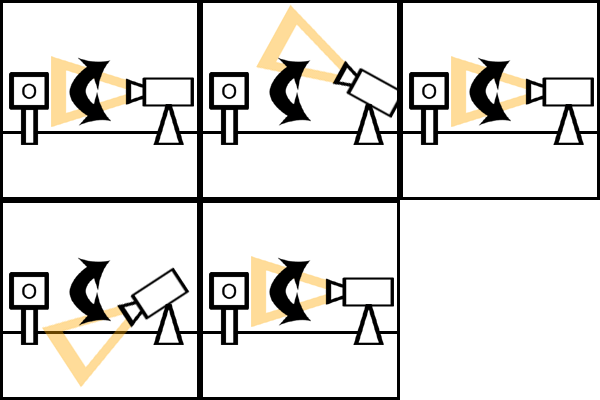 This is similar to the pan except it rotates up and down in a vertical plane. The camera is in a fixed position once again and it replicates someone turning their head to look up and down. This technique is generally used to establish an object or character and their importance or important aspects. Typically a tripod is used to keep the camera stationary and move to the angle it is pointing to.
 This is similar to a panning shot going from left to right or right to left and the camera also moves vertically/horizontally along with the action. Tracking shots are used to establish action, create tension and show the enormity of the task or the heroic status of the characters.
 This camera movement is done using a camera dolly which is a wheeled cart or similar device that creates a smooth horizontal shot. When creating this, the camera is mounted to the dolly and the operator and focus puller are used when the dolly is being pushed back and forth.
 This is a camera movement performed by a camera on a crane or a jib. It is used to view the actors fro above or to move up and away from them. A crane shot is extremely popular in terms of film endings.

Steadicam
This is when a camera is mounted to a stabiliser to establish a smooth shot even when moving quickly over uneven surfaces. It combines the steadiness of a tripod shot with the fluid motion of a dolly.

Hand-held
This shot is taken when the camera is held by hand as opposed to being mounted. It gives a shakier effect and the 'shaky camera' can also be emphasised by the operator during filming. The hand-held shot gives a make-shift feel whilst providing a sense of dynamics, immersion, instability and nervousness. This is the sort of camera movement I would like to feature a lot of in my short film as I feel it will be very fitting to the tension and atmosphere of the action.

Zoom
This is rather self explanatory but this is when the focal length of the lens is either increased or decreased. It can be a tracking zoom or static. Typically it's used to emphasise a particular moment, reaction or item. The speed of the zoom can vary from slow to fast depending on the effect the director intends to have on the audience.

Reverse zoom
This is when the camera is moving towards the background while zooming out or, vice versa, when the camera moves away from the background whilst the camera zooms in. It was first used by Hitchcock in Vertigo. It has a unique effect of the background's size increasing or decreasing while the subject stays around the same size. This is often used for realisation.
Pan
This is where you move your camera horizontally, either left to right or right to left. Whilst the camera is being moved horizontally it is fixed to a base which gives a slicker effect on screen. This can be used to follow the action or get a sense of location in the story. The view seems to 'pass by'. It is short for a panorama, suggesting there is an expansive view that exceeds the gaze. Tilt
This is similar to the pan except it rotates up and down in a vertical plane. The camera is in a fixed position once again and it replicates someone turning their head to look up and down. This technique is generally used to establish an object or character and their importance or important aspects. Typically a tripod is used to keep the camera stationary and move to the angle it is pointing to. Tracking
 This is similar to a panning shot going from left to right or right to left and the camera also moves vertically/horizontally along with the action. Tracking shots are used to establish action, create tension and show the enormity of the task or the heroic status of the characters.
Dolly
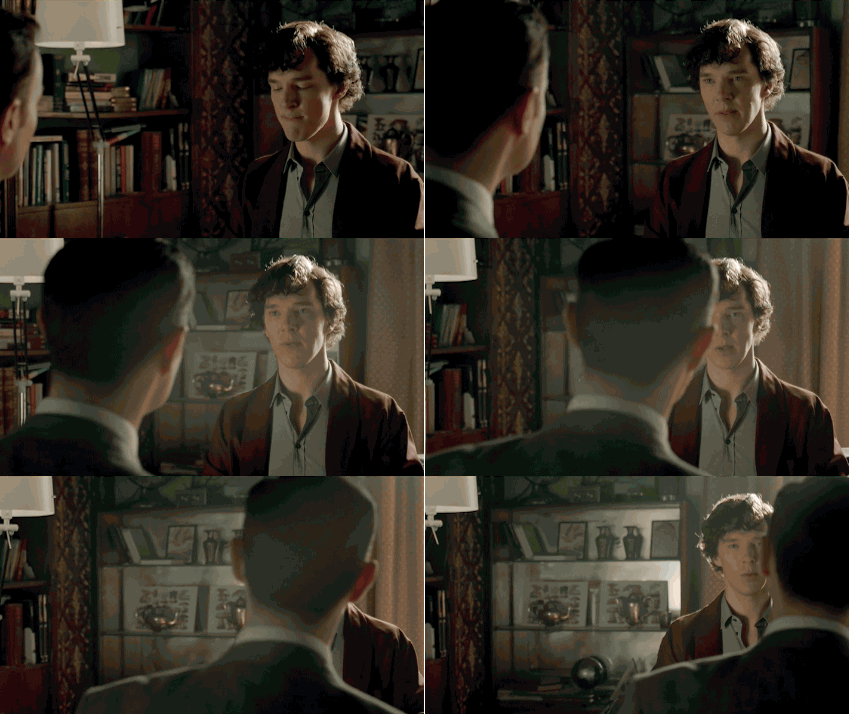 This camera movement is done using a camera dolly which is a wheeled cart or similar device that creates a smooth horizontal shot. When creating this, the camera is mounted to the dolly and the operator and focus puller are used when the dolly is being pushed back and forth.
Crane
 This is a camera movement performed by a camera on a crane or a jib. It is used to view the actors fro above or to move up and away from them. A crane shot is extremely popular in terms of film endings.

This is when a camera is mounted to a stabiliser to establish a smooth shot even when moving quickly over uneven surfaces. It combines the steadiness of a tripod shot with the fluid motion of a dolly.

Hand-held
This shot is taken when the camera is held by hand as opposed to being mounted. It gives a shakier effect and the 'shaky camera' can also be emphasised by the operator during filming. The hand-held shot gives a make-shift feel whilst providing a sense of dynamics, immersion, instability and nervousness. This is the sort of camera movement I would like to feature a lot of in my short film as I feel it will be very fitting to the tension and atmosphere of the action.

Zoom
This is rather self explanatory but this is when the focal length of the lens is either increased or decreased. It can be a tracking zoom or static. Typically it's used to emphasise a particular moment, reaction or item. The speed of the zoom can vary from slow to fast depending on the effect the director intends to have on the audience.
Reverse zoom
This is when the camera is moving towards the background while zooming out or, vice versa, when the camera moves away from the background whilst the camera zooms in. It was first used by Hitchcock in Vertigo. It has a unique effect of the background's size increasing or decreasing while the subject stays around the same size. This is often used for realisation.
Sunday, 5 November 2017
Camera Shots and Angles
Different camera angles and shots will be chosen to emphasise various elements on the screen. For example, if an airplane flying overhead is of importance to the story, filmmakers may choose to use a low-angle shot to show the significance of the plane in the sky. Needless to say, cinematographers will choose different angles for different scenes within the same movie depending of the scene goal or purpose.
Here are some of the shots I researched:
Low angle
 This is a shot of an object of person from below looking up and it is sometimes referred to as a "worm shot". It is used to increase the height of an object to make it seem more powerful or threatening, likewise to apply dominance to a person in a scene. Typically, the background is the sky or a ceiling which creates a sense of disorientation within the viewer through the lack of setting.
 Canted angle
In this shot the camera is set on an angle on its roll ax so that the shot is composed of vertical lines at an angle to the side of the frame. This viewpoint makes you tilt your head to the side and is often used to portray psychological uneasiness or tension in the subject being. A handheld camera is normally used for this effect.
High angle
 A high angle shot is looking down upon a subject or an object. This shot is used to make the subject seem vulnerable or "chicken" when applied with the correct mood, setting and effects. It can be used to make people seem less significant and the audience more dominant simultaneously.
 Eye level
This is a rather neutral and generic shot in terms of camera angles and this is most common within film. Typically the camera is positioned as if the audience is observing a scene among the characters present on screen. This shows a levelled focus with someone else's head and the camera is placed about six feet from ground level.
Bird's-Eye View
 This angle is similar to what a bird would see whilst flying above. Sometimes this is used as an establishing shot to show where the character is or where it is that they are travelling to. To use this in a film footage, it is typically shot from a helicopter.
Extreme long shot
 This is taken very far away from the focus of the shot and this distance is usually about a quarter of a mile. Often this is used for the beginning of a film or to set the scene when characters arrive in a new setting. There is not a lot of detail in shot, just enough for the audience to create an impression of the scenario itself. Generally it is just the location or buildings in these shots. An example would be if there was one character on their own in an extreme long shot, it would give the impression to the audience that this character is particularly isolated.
Long shot
 In film production, a long shot (sometimes referred to as a full shot or, to remove ambiguity, wide shot) typically shows the entire object or human figure and is usually intended to place it in some relation to its surroundings. These are typically shot using wide angle cameras.

Establishing shot
This shot establishes the context of the scene showing where the programme/film is set. Typically it is the first shot of a new scene and producers usually use a long or extreme long shot to do so.
Master shot
 This is a shot when all of the actors are kept in view on screen for the duration of the entire scene. Usually this is a long shot to ensure that all of the action can be observed. This can sometimes perform as a double function as an establishing shot.
 Mid-shot
In a mid shot, the figure is generally viewed from the knees or waist up. An example of this would be used is when there is little to no dialogue in the scene. The background would have minimal detail as this would have been established earlier on in the scene. This image would be a good example because the scene appears to feature more action than it does dialogue; it is creating tension.
Close-up
 This shot tightly frames an object or a person with little background featuring. It is used to highlight the significance of a moment, thing or reaction. Generally everything on screen, besides the face and the mise en scene, is blurred or kept simple to magnify the importance of the action taking place. If there is a character in this shot, it has usually been done so the audience can see their expression and empathise with their emotion.
 Extreme close-up
This shot is even more zoomed in than the close-up and it is done for further emphasis and effect. More often than not, it magnifies beyond what the human eye can see and experience in reality. Generally it is used on an area of the face, such as the eyes, and there is no background so that all focus is on one feature. It is used to show deeper emotion within a character for further sympathy, and it gives a dramatic effect. This shot can also be used on objects e.g. a ring to show the significance of that particular symbol.
Shot reverse shot
 This is a continuity editing technique used in conversations or simply characters looking to one another or at an object. It shows what the character is looking at followed by a reverse angle shot of the character themselves looking at it, or of the other character in the scene. This often ties in with the 180° rule to retain continuity and not distort the audience's sense of location of the characters in the shot.
Over the shoulder
 This is a shot of someone or something taken from the perspective of over the shoulder of another person. To emphasise this, the back of the head and shoulder of the person is usually kept in shot and used to frame the image. It is a common shot if two people are having a discussion and it can often follow an establishing shot so the audience can place the characters.
Two shot
 This shot includes two people, although these people do not have to be next to each other. It is useful to display the emotional reactions between the subject and because they have more focus on them, it gives the characters more importance. When the characters are not in the same frame, the two shot is when there are two people caught within the same camera movement.
Point of View (POV)
 This is a shot from a first person or subjective camera that shows the audience exactly what the character is looking at, represented through the camera. It is usually established by being positioned between a shot of a character looking at something, and a shot showing the character's reaction. The technique of POV is one of the foundations of film editing.
Using the research I have done and by analysing what looks best for particular scenes in a short film, I think the exploration of these camera techniques has benefitted me; I can now ensure that in my short film I make each shot fulfill its potential and make sure that all camera movements have a reason behind them. This will encourage me to think much more carefully about each shot I take and hopefully mean I am more successful in keeping my target audience engaged throughout.
Here are some of the shots I researched:
Low angle
 Canted angle
In this shot the camera is set on an angle on its roll ax so that the shot is composed of vertical lines at an angle to the side of the frame. This viewpoint makes you tilt your head to the side and is often used to portray psychological uneasiness or tension in the subject being. A handheld camera is normally used for this effect.
High angle

 Eye level
This is a rather neutral and generic shot in terms of camera angles and this is most common within film. Typically the camera is positioned as if the audience is observing a scene among the characters present on screen. This shows a levelled focus with someone else's head and the camera is placed about six feet from ground level.
Bird's-Eye View
This angle is similar to what a bird would see whilst flying above. Sometimes this is used as an establishing shot to show where the character is or where it is that they are travelling to. To use this in a film footage, it is typically shot from a helicopter.Extreme long shot
 This is taken very far away from the focus of the shot and this distance is usually about a quarter of a mile. Often this is used for the beginning of a film or to set the scene when characters arrive in a new setting. There is not a lot of detail in shot, just enough for the audience to create an impression of the scenario itself. Generally it is just the location or buildings in these shots. An example would be if there was one character on their own in an extreme long shot, it would give the impression to the audience that this character is particularly isolated.
Long shot
In film production, a long shot (sometimes referred to as a full shot or, to remove ambiguity, wide shot) typically shows the entire object or human figure and is usually intended to place it in some relation to its surroundings. These are typically shot using wide angle cameras.Establishing shot
This shot establishes the context of the scene showing where the programme/film is set. Typically it is the first shot of a new scene and producers usually use a long or extreme long shot to do so.
Master shot
 Mid-shot
In a mid shot, the figure is generally viewed from the knees or waist up. An example of this would be used is when there is little to no dialogue in the scene. The background would have minimal detail as this would have been established earlier on in the scene. This image would be a good example because the scene appears to feature more action than it does dialogue; it is creating tension.
Close-up
 This shot tightly frames an object or a person with little background featuring. It is used to highlight the significance of a moment, thing or reaction. Generally everything on screen, besides the face and the mise en scene, is blurred or kept simple to magnify the importance of the action taking place. If there is a character in this shot, it has usually been done so the audience can see their expression and empathise with their emotion.

This shot is even more zoomed in than the close-up and it is done for further emphasis and effect. More often than not, it magnifies beyond what the human eye can see and experience in reality. Generally it is used on an area of the face, such as the eyes, and there is no background so that all focus is on one feature. It is used to show deeper emotion within a character for further sympathy, and it gives a dramatic effect. This shot can also be used on objects e.g. a ring to show the significance of that particular symbol.
Shot reverse shot
This is a continuity editing technique used in conversations or simply characters looking to one another or at an object. It shows what the character is looking at followed by a reverse angle shot of the character themselves looking at it, or of the other character in the scene. This often ties in with the 180° rule to retain continuity and not distort the audience's sense of location of the characters in the shot.Over the shoulder
 This is a shot of someone or something taken from the perspective of over the shoulder of another person. To emphasise this, the back of the head and shoulder of the person is usually kept in shot and used to frame the image. It is a common shot if two people are having a discussion and it can often follow an establishing shot so the audience can place the characters.
Two shot

Point of View (POV)
 This is a shot from a first person or subjective camera that shows the audience exactly what the character is looking at, represented through the camera. It is usually established by being positioned between a shot of a character looking at something, and a shot showing the character's reaction. The technique of POV is one of the foundations of film editing.
Using the research I have done and by analysing what looks best for particular scenes in a short film, I think the exploration of these camera techniques has benefitted me; I can now ensure that in my short film I make each shot fulfill its potential and make sure that all camera movements have a reason behind them. This will encourage me to think much more carefully about each shot I take and hopefully mean I am more successful in keeping my target audience engaged throughout.
Sunday, 15 October 2017
Audience theorists
Within our theory lesson, the class was divided and we researched different narrative theorist and the theorists. After doing so we reported back to one another and collected a plethora of notes to ensure we had a selection of theories to put into our narratives. Here are the theories and theorists that were researched:
Theodor W. Adorno
 Adorno was a German philosopher, sociologist, and composer known for his critical theory of society. He was a leading member of the Frankfurt School of critical theory, whose work had been associated with such thinkers as Ernst Bloch, Walter Benjamin, Max Horkheimer and Herbert Marcuse, for whom the works of Freud, Marx and Hegel were essential to a critique of modern society. his main interests were social theory, sociology, psychoanalysis, aesthetics,epistemology, musicology and mass media.
Upon his return to Frankfurt, Adorno helped in shaping the political culture of West Germany. Adorno worked on the intellectual foundations of the federal republic and was a professor at Frankfurt University until his death in 1969. Whilst he was there he taught his students "contemporary problems in the theory of knowledge" and the "concept of knowledge". He also wrote about critical theory, literary criticism, aesthetics, music, political theory and sociology.
Adorno also did a lot of work on fascism as he took a particular interest in this. He created a series of influential works to describe psychological fascist traits. His work contributed to the Studies in Prejudice performed by multiple research institutes in the US, consisting of 'qualitative interpretations'. Adorno's books have had a major influence on sociology and remain highly discussed and debated.
Famous Adorno quote:
"Probably no important artwork ever corresponded completely with its genre".
David Gauntlett
 Gauntlett is a British sociologist and media theorist. His earlier work concerned contemporary media audiences and has moved towards a focus on the everyday making and sharing of digital media and social media and their role of these activities in self-identity and building creative cultures.
Platforms for Creativity is a concept created by Gauntlett and it is meant to encourage creative conversation and foster the creativity of people. These 'platforms' can be in the form of an event, environment or tools. They give the opportunity to think creatively expressing themselves and also to help with the connection of people and sharing ideas to contribute better ideas.
He believes that the traditional form of media studies teaching and research fails to recognise the changing media landscape in which the categories of 'audiences' and 'producers' blur together. This was published in "Media Studies 2.0". Another popular study of Gauntlett's is "Web 2.0". This states that, as an audience, we can become our own producers. It allows us to create our own identity that doesn't follow the traditional forms and conventions of gender. Web 2.0 gives freedom for people to express themselves and makes it far more acceptable to be different.
Gauntlett blows apart the image of 'couch potatoes' and uses the term 'prosumers' for the audience who are doing their own production.
Famous Gauntlett quote:
"Making is connecting".
Stuart Hall
 Stuart Hall places high value on the responses of individuals and groups because of their specific personal contexts. Audiences are seen as active producers of meaning as opposed to consumers of media meanings. His interests were in dominant, negotiated and oppositional reading. Hall was a cultural theorist, political activist, sociology professor at the open university and a Marxist. He created the Reception Theory because he was concerned that the power of the media would create a dominant ideology of social values.
Hall's theory of audience positioning refers to how different social groups interpret mass media text which the producer encodes a message they wish to convey.
Decoding:

Theodor W. Adorno
Upon his return to Frankfurt, Adorno helped in shaping the political culture of West Germany. Adorno worked on the intellectual foundations of the federal republic and was a professor at Frankfurt University until his death in 1969. Whilst he was there he taught his students "contemporary problems in the theory of knowledge" and the "concept of knowledge". He also wrote about critical theory, literary criticism, aesthetics, music, political theory and sociology.
Adorno also did a lot of work on fascism as he took a particular interest in this. He created a series of influential works to describe psychological fascist traits. His work contributed to the Studies in Prejudice performed by multiple research institutes in the US, consisting of 'qualitative interpretations'. Adorno's books have had a major influence on sociology and remain highly discussed and debated.
Famous Adorno quote:
"Probably no important artwork ever corresponded completely with its genre".
David Gauntlett
Gauntlett is a British sociologist and media theorist. His earlier work concerned contemporary media audiences and has moved towards a focus on the everyday making and sharing of digital media and social media and their role of these activities in self-identity and building creative cultures.Platforms for Creativity is a concept created by Gauntlett and it is meant to encourage creative conversation and foster the creativity of people. These 'platforms' can be in the form of an event, environment or tools. They give the opportunity to think creatively expressing themselves and also to help with the connection of people and sharing ideas to contribute better ideas.
He believes that the traditional form of media studies teaching and research fails to recognise the changing media landscape in which the categories of 'audiences' and 'producers' blur together. This was published in "Media Studies 2.0". Another popular study of Gauntlett's is "Web 2.0". This states that, as an audience, we can become our own producers. It allows us to create our own identity that doesn't follow the traditional forms and conventions of gender. Web 2.0 gives freedom for people to express themselves and makes it far more acceptable to be different.
Gauntlett blows apart the image of 'couch potatoes' and uses the term 'prosumers' for the audience who are doing their own production.
Famous Gauntlett quote:
"Making is connecting".
Stuart Hall
Stuart Hall places high value on the responses of individuals and groups because of their specific personal contexts. Audiences are seen as active producers of meaning as opposed to consumers of media meanings. His interests were in dominant, negotiated and oppositional reading. Hall was a cultural theorist, political activist, sociology professor at the open university and a Marxist. He created the Reception Theory because he was concerned that the power of the media would create a dominant ideology of social values.Hall's theory of audience positioning refers to how different social groups interpret mass media text which the producer encodes a message they wish to convey.
Decoding:
- Dominant reading- the reader fully accepts the preferred reading. This is where the audience reads the text the way the director intended them to. The code seems natural.
- Negotiated reading- the reader will partly believe the code and accepts the preferred but may modify it to reflect their own experiences and interests.
- Oppositional reading- the reader will reject the reading as their social position places them in an oppositional relation to the dominant code.
Some researchers think that looking at the lifestyle of an audience is much more effective and has more authority than a sociological approach.
How audiences take the meaning
Factors affecting how individuals decode media texts:
- Life experience
- Mood at the time of viewing
- Age
- Culture
- Beliefs
- Gender
Blumler and Katz
Uses and Gratification theory: approach to understanding why and how people actively seek out specific media to satisfy specific needs. It's an audience-centered approach to understanding mass communication. The main question of their theory is "Why do people use media and what do they use it for?"
Blumler (born 1924)- American-born theorist and author of communication and media.
Katz- American and Israeli sociologist and communication scientist, usually associated with uses and gratifications theory.
Basic model:
- Identify- being able to recognise the product or person in front of you and an aspiration to someone else.
- Educate- being able to acquire information, knowledge and understanding.
- Entertain- what you are consuming should give you enjoyment (forgetting worries in everyday life).
- Social interaction- the ability for media products to produce a topic of conversation between other people and spark debates.
What does the audience do with the media? This approach moves away from the idea that audiences are passive. This theory can be used in cases like personal music collection and selecting music to fit a particular mood.
Clay Shirky
 Clay Shirky is an American Professor who looks at the economic effects of social media. His 'end of audience' theory links into the work of David Gauntlett. It argues a chaotic landscape where consumers are producers (or "prosumers"). Shirky felt it had previously been fragmented activity however it has changed; now people operate as groups. He has identified new audience groupings as follows:
Clay Shirky
Clay Shirky is an American Professor who looks at the economic effects of social media. His 'end of audience' theory links into the work of David Gauntlett. It argues a chaotic landscape where consumers are producers (or "prosumers"). Shirky felt it had previously been fragmented activity however it has changed; now people operate as groups. He has identified new audience groupings as follows:- crowd funding
- crowd funded businesses
- collaborative projects
- publicity campaigns (volunteers)
Shirky believes that organisations have to understand and respect the motivations of the billion new participants in the contemporary media eco-systems.
Shirky quote: "Every consumer is also a producer and everyone can talk back"- he states that the evidence for this is devised from simple maths and the connections in a networks.
Shirky also became part of the development of the 'Long tail Theory' which is about there being life beyond the initial appearance of the product. Amazon are a company that recognise this theory and understand how reviews express emotions of people. They have embraced the world of social media and their reviews now serve a purpose of making audiences feel good.
Subscribe to:
Posts (Atom)

-
When planning to create a magazine review page, it is essential to look at example and deconstruct what they have done in order to discover...
-
Within our theory lesson, the class was divided and we researched different narrative theorist and the theorists. After doing so we reported...


